











From Uptime to Resilience: The Shift in Modern IT Infrastructure Strategy

Downtime today is more than an inconvenience – it’s a direct business risk. Studies show that even a single hour of downtime can cost enterprises thousands to millions of dollars, depending on scale. Meanwhile, modern cloud environments operate under the assumption that failures will happen – not if they happen – driven by hardware faults, human errors, and software bugs. This reality is forcing organizations to rethink a long-standing metric: uptime. 

The Problem with an “Uptime-Only” Mindset 

For years, IT strategies revolved around maximising uptime – keeping systems running as long as possible. While uptime is still important, it is no longer sufficient in today’s distributed, hybrid, and multi-cloud environments.

Traditional uptime strategies focus on prevention: 

  • Avoiding outages.
  • Maintaining redundant hardware  
  • Monitoring system availability  

But modern IT ecosystems are far more complex. With applications spanning cloud, on-premises, and hybrid infrastructures, failure is inevitable. As cloud resiliency principles highlight, organisations must anticipate disruptions and recover quickly without data loss rather than assuming perfect availability.  

This is where the shift begins. 

The Shift: From Uptime to Resilience 

Resilience goes beyond uptime. It is the ability of systems to withstand, adapt to, and rapidly recover from disruptions – while maintaining business continuity. 

Instead of asking, “How do we avoid downtime?,” modern IT leaders ask: 

  • How quickly can we recover (RTO)?  
  • How much data can we afford to lose (RPO)?  
  • Can recovery be automated and tested regularly?  

This shift is driven by three realities: 

1. Failure is inevitable: Cloud-native architectures assume constant risk – failures are part of the system design, not exceptions. 

2. Speed of recovery matters more than prevention: Businesses now compete on how fast they bounce back, not just how long they stay up. 

3. Complexity requires automation: Manual disaster recovery processes are too slow and error-prone for modern environments. 

Why Organisations Must Act Now 

Digital transformation, remote work, and real-time customer expectations have raised the stakes. A delayed recovery can impact: 

  • Revenue and customer trust
  • Regulatory compliance
  • Brand reputation

At the same time, managing resilience internally is challenging. Many organisations lack: 

  • Dedicated disaster recovery (DR) expertise  
  • Standardised processes  
  • Continuous testing mechanisms  

This creates a gap between resilience goals and execution capabilities – and that’s where managed resiliency solutions become critical.

Yntraa Resiliency Assurance Service (RAS): Making Resilience Real 

Yntraa’s Resiliency Assurance Service (RAS) is designed to bridge this gap by transforming disaster recovery from a complex, manual task into an automated, fully managed service.  

Rather than offering just tools, RAS delivers an end-to-end resiliency framework that covers the entire lifecycle of disaster recovery.

1. End-to-End Managed Resilience: RAS handles everything – from DR site analysis and setup to ongoing monitoring, drills, and execution. This eliminates the need for in-house DR specialists and ensures continuous readiness.

2. Automation-Driven Recovery: With features like single-click switchover and switchback, RAS minimizes recovery time objectives (RTO) and reduces human intervention. Automated DR drills allow organizations to test resilience without disrupting operations.  

3. Real-Time Visibility & Control: RAS provides a centralized dashboard with real-time RPO/RTO tracking and health alerts, enabling proactive decision-making and immediate response to issues.  

4. Hybrid & Multi-Environment Support: Modern enterprises operate across diverse environments. RAS supports physical, virtual, cloud, and hybrid infrastructures, ensuring consistent resiliency across the entire IT landscape.  

5. Reliable Failover Execution: Failover and failback processes are fully managed, including automated network and DNS changes – ensuring seamless transitions during disruptions.  

6. Cost Efficiency Without Compromise: By eliminating the need for dedicated DR infrastructure, RAS significantly reduces capital expenditure while delivering enterprise-grade resilience.  

From Strategy to Execution: Why RAS is Central 

The shift from uptime to resilience is not just conceptual – it requires execution. Organizations need: 

  • Continuous monitoring  
  • Automated orchestration  
  • Regular DR testing  
  • Expert management  

Yntraa RAS brings all these elements together into a single, unified service. It enables businesses to move from reactive recovery to proactive resilience, ensuring systems are always prepared for disruption. 
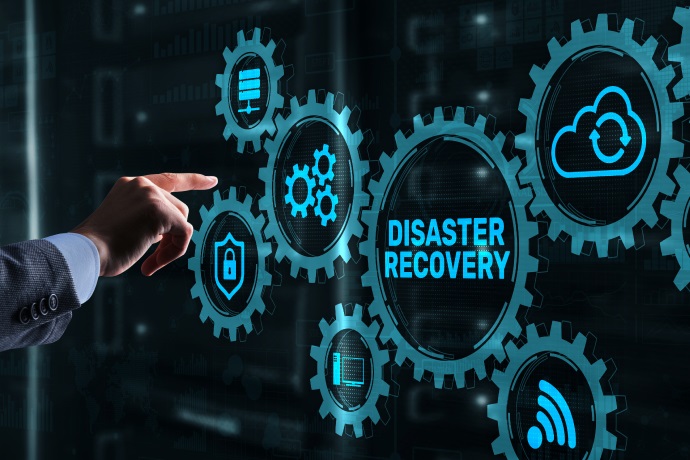
Safeguarding Your Business: The Crucial Role of Disaster Recovery

In today’s fast-paced digital landscape, understanding the importance of disaster recovery (DR) is paramount. DR, a critical aspect of business continuity, ensures that your organisation can swiftly recover IT infrastructure functionality in the aftermath of a disaster event, whether it’s a natural catastrophe or the result of human error. This blog explores the significance of disaster recovery and its role in safeguarding your business against catastrophic disruptions.

High Stakes of Neglecting Disaster Recovery
In a recent survey, it was discovered that merely 54% of companies have implemented a comprehensive disaster recovery plan across their entire organisation. Interestingly, 57% of the surveyed firms maintain a secondary on-premises data center specifically designated for disaster recovery purposes.1. The statistics are sobering: According to an online source, 93% of companies without a disaster recovery plan face the grim reality of going out of business within a year after a major data disaster strikes2. Yet, astonishingly, most of the small businesses lack a disaster recovery plan. These figures emphasise the urgency for businesses, particularly those relying on cloud operations, to prioritise disaster recovery.

Disruptions can occur at any time, without warning. Your network might experience an outage, a critical software bug might emerge, or a natural disaster could disrupt your operations. According to a report by Logic Monitor, an impressive 96% of IT organisations across the globe experienced at least one outage between the years 2019 and 2022. Having a strong and routinely evaluated disaster recovery strategy can be a game-changer. According to information available online, a staggering 80% of businesses that lack disaster recovery plans ultimately face closure3.

Role of Disaster Recovery as a Service (DRaaS)
Many cloud providers offer Disaster Recovery as a Service (DRaaS), allowing businesses to back up their data and IT infrastructure on third-party cloud platforms. During a crisis, these providers orchestrate the DR plan to restore access and functionality, minimising operational interruptions. The DRaaS market is projected to grow significantly, from USD 10.7 billion in 2023 to USD 26.5 billion by 2028, according to a report by MarketsandMarkets.

Responsibility and Collaboration
Implementing a disaster recovery plan is not the sole responsibility of the IT or Operations department. All employees should be familiar with the plan and their roles in executing it effectively. This collaborative approach enhances resilience and ensures that every staff member can contribute to disaster preparedness.

Regular Testing for Ongoing Preparedness
Regular testing is essential for a successful disaster recovery plan. An annual review is recommended, with more frequent tests in response to operational changes. This ensure that the plan is efficient and is up to date. Expert reviews can uncover overlooked gaps or new scenarios, which should be documented and incorporated into the plan.

The Impact of Data Loss on Customer Trust
Data breaches can severely damage customer trust and reputation. Customers may lose confidence in a company’s ability to protect their data, potentially leading to a loss of loyalty and business. Negative publicity further erodes an organisation’s reputation, making it harder to rebuild trust and attract new customers.

To ensure a fail-safe disaster recovery testing, consider these tips:

  • Plan ahead and test frequently.
  • Use a sandbox for testing to avoid disrupting production servers.
  • Take advantage of cost-effective cloud-based testing.
  • Encourage regular employee participation in testing to build familiarity and confidence.

Implementing prevention, preparedness, response, and recovery (PPRR) measures is a critical component of a comprehensive disaster recovery strategy for cloud computing environments. These measures serve distinct roles in safeguarding your infrastructure:

  1. Prevention: The aim of prevention measures is to proactively reduce potential threats and eliminate system vulnerabilities, effectively preventing disasters from occurring in the first place. By identifying and mitigating risks, you can significantly reduce the likelihood of a disaster event.
  2. Preparedness: Preparedness involves the creation of a detailed disaster recovery (DR) plan that outlines the actions to be taken during an actual DR event. It is essential to meticulously document every step of this process to ensure the seamless execution of the DR plan when a disaster strikes.
  3. Response: The response phase defines the specific DR strategies and actions that should be enacted when a disaster event occurs. This is the phase where you address the incident head-on and work to mitigate its impact on your systems and operations.
  4. Recovery: Recovery focuses on the steps necessary to successfully restore your infrastructure after a disaster and minimise the resulting damage. It encompasses the restoration of data, applications, and services to their functional state.

Once you’ve determined which approach to disaster recovery aligns with your needs, the next crucial step is selecting a data protection solution that can bring your DR plan to life and achieve your recovery objectives. For a well-informed choice, take into account the following factors:

  • Available Services
  • Hardware Capacity
  • Bandwidth
  • Data Security
  • Ease of Use
  • Service Scalability
  • Cost
  • Reputation

In an unpredictable world, disaster recovery stands as a crucial pillar of business resilience. Recognising its significance and potential consequences allows organisations to fortify their future and maintain uninterrupted operations. Embrace disaster recovery as an indispensable facet of your business strategy to not only survive but thrive in the face of adversity.

As you assimilate these insights into your disaster recovery strategy, consider the comprehensive disaster recovery solution offered by Yotta. Our service is meticulously tailored to suit your enterprise’s IT recovery needs, providing on-demand recovery capabilities. We create custom solutions by employing a range of methods such as storage, backup, and replication, as well as diverse infrastructure options including on-premises, private, public, hybrid cloud, and hosted cloud setups.

Our aim is to minimise the impact (RPO) of disruptions and facilitate faster recovery (RTO), ensuring your business’s future is secure, come what may. Don’t leave the fate of your business to chance—take proactive steps with Yotta’s disaster recovery service to guarantee its resilience and continuity.