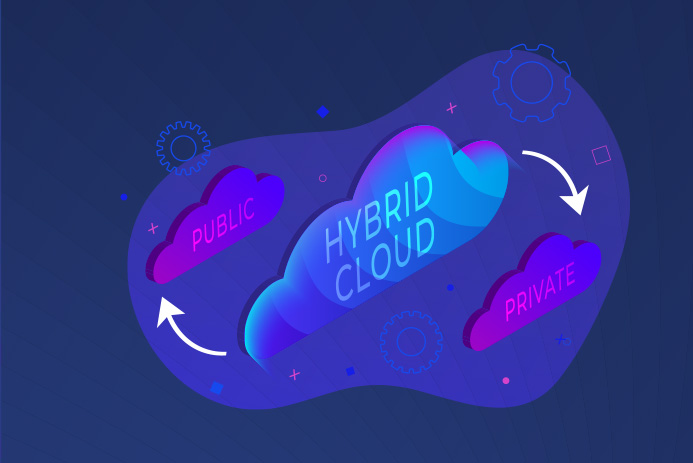













Best Practices for Managing Resources in a Multi-Cloud Environment 

Multi-cloud architecture is no longer an emerging trend; it’s an established reality. Recent industry reports show that nearly 90% of enterprises have embraced a multi-cloud strategy to leverage the unique strengths of different providers and enhance resilience. However, this strategic move introduces significant operational hurdles. The top challenge cited by a majority of these organisations is managing cloud spend, with an estimated 30% of cloud expenditure being wasted on inefficient resources. This complexity creates a critical need for a disciplined, technical approach to resource management.

Without a robust framework, the promise of multi-cloud agility can be quickly undermined by fragmented visibility, inconsistent security, and runaway costs. Successfully managing a distributed infrastructure requires moving beyond ad-hoc efforts to a cohesive, technology-driven strategy.

Technical Best Practices for Multi-Cloud Management 

To truly harness the power of a multi-cloud or hybrid cloud environment, organisations must implement a set of core technical disciplines.

  • Establish Unified Governance with Infrastructure as Code (IaC): In a multi-cloud setup, manual configuration is a direct path to security gaps and inconsistencies. The best practice is to manage your infrastructure programmatically using IaC tools like Terraform. By defining your resources—from virtual machines to network security groups—in version-controlled code, you create a single source of truth. This allows you to enforce standardised security policies, manage configurations, and ensure compliance across all cloud platforms automatically.
  • Implement Comprehensive Observability, Not Just Monitoring: Basic monitoring of CPU and memory is no longer enough. True visibility across a distributed environment requires observability the ability to analyse metrics, logs, and traces in a unified platform. Implementing a “single-pane-of-glass” observability solution is critical. It allows your teams to correlate performance issues and security events across your on-premises data center and multiple cloud providers, drastically reducing Mean Time to Resolution (MTTR) and identifying root causes that would otherwise remain hidden in data silos.
  • Enforce Proactive FinOps and Cost Optimisation: To combat the estimated 30% of wasted cloud spend, organisations must adopt a proactive financial operations (FinOps) model. This involves more than just monitoring a monthly bill.
  • Automated Scheduling: Implement “start/stop” schedules for non-production environments to ensure you’re not paying for idle development and testing resources during off-hours.
  • Continuous Rightsizing: Use performance data from your observability platform to continuously rightsize virtual machines and storage volumes, ensuring you pay only for the capacity you need.
  • Leverage Spot Instances: For fault-tolerant or batch-processing workloads, strategically using spot or preemptible instances can reduce compute costs by up to 90% compared to on-demand pricing.

The Strategic Accelerator: Cloud Management Services 

While establishing a FinOps culture and an IaC pipeline in-house is the goal, the reality is that it requires a rare and expensive combination of multi-platform expertise. The complexity multiplies in a hybrid cloud model, where bridging the operational gap between on-premises and public cloud systems is a persistent challenge. This is where expert Cloud Management Services act as a strategic accelerator. 

Engaging a specialised provider gives you immediate access to the certified expertise and sophisticated toolsets required to implement these technical best practices effectively and at scale. At Yotta, our Cloud Management Services are designed to function as an extension of your team. We provide the unified platform and proactive governance needed to bring order to your multi-cloud estate, allowing you to focus on innovation while we ensure your infrastructure is secure, compliant, and cost-efficient. 

 A multi-cloud strategy without a technically sound management framework is an incomplete strategy. It invites risk and inefficiency that negate the very benefits you seek to achieve. By implementing these technical best practices, you can transform your multi-cloud environment from a source of complexity into a powerful engine for business growth.


Key Metrics for Assessing the Performance of Cloud Management Solutions in Business Operations 

With cloud technologies becoming central to business operations, cloud management solutions (CMS) have evolved from simple infrastructure tools to holistic platforms that drive agility, cost-efficiency, security, and compliance. According to Gartner, over 85% of organisations will embrace a cloud-first principle by 2025, and IDC estimates that global spending on cloud infrastructure and services will exceed $1.3 trillion by 2027. As enterprises scale across hybrid cloud and multi-cloud environments, managing this complexity effectively becomes critical. To maximise the value of CMS platforms, businesses must continuously evaluate how well these solutions are performing. This requires a clear understanding of the right metrics to track, those that align with business goals, IT maturity, and operational benchmarks. 

Why Metrics Matter in Cloud Management 

Without proper measurement, cloud strategies can quickly lead to cost overruns, security lapses, and performance bottlenecks. Cloud management metrics offer visibility into your infrastructure’s health, guide proactive decision-making, and ensure you’re extracting the full value of your cloud investments.

More importantly, these metrics help: 

  • Align IT performance with business KPIs. 
  • Avoid cloud sprawl and resource wastage. 
  • Enforce security and compliance policies. 
  • Automate manual processes and reduce operational overhead. 
  • Drive accountability across IT and development teams. 

These outcomes are critical in dynamic environments such as multi-cloud and hybrid-cloud setups, where managing distributed workloads, applications, and services can become complex without a centralised management layer. 

Key Metrics to Track for Cloud Management Success 

  1. Cloud FinOps: Cost as a Performance Driver, Not Just a Budget Line

Cloud cost isn’t about cutting spend-it’s about right-sizing it in line with business outcomes. FinOps-driven metrics include: 

  • Unit Economics: Cost per transaction, customer, or compute cycle. A true measure of efficiency at scale. 
  • Spend Efficiency Ratio (SER): Value generated vs. cost incurred across environments. 
  • Anomaly Detection Frequency: How often cost spikes occur and how quickly they’re resolved. 
  • Savings Realised through Governance Policies: Result of tagging, idle resource reclamation, and scheduled workload shutdowns. 
  1. Multi-Cloud Performance Consistency

In enterprises using AWS, Azure, GCP, and sovereign clouds, cross-platform performance coherence is essential. Key metrics include: 

  • Latency Variation Across Providers 
  • Availability Scorecard per Region/Provider 
  • Interoperability Metrics: How smoothly workloads, APIs, and identity systems interact across cloud silos. 
  • DR Failover Efficiency Across Clouds 
  1. Operational Agility and Automation Coverage

Cloud agility isn’t just about spinning up VMs. It’s about abstracting complexity through intelligent automation. Track: 

  • Automation Coverage Ratio: % of cloud operations executed via automation vs. manual effort. 
  • Mean Time to Deploy (MTTD): From ideation to production for new cloud-native services. 
  • Policy-as-Code Adoption Rate: Integration of compliance, security, and infra rules in the development pipeline. 
  • Elasticity Metrics: Time taken for infrastructure to respond to workload surges. 

These indicators reflect how cloud management contributes to speed, not just stability. 

  1. Zero Trust & Compliance Continuity

With growing attack surfaces and regulatory pressure, modern CMS must track real-time enforcement of security policies: 

  • Cloud Misconfiguration Detection Rate 
  • Privilege Escalation Attempts Blocked 
  • Compliance Drift Score: Measures deviation from baseline frameworks like MeitY, ISO 27001, or GDPR. 
  • Response Time to Security Events 

Zero trust models require continuous posture management, not just perimeter control. 

Yotta’s Cloud Management Service: A 360° Cloud Enablement Platform 

Yotta’s Cloud Management Service (CMS) is purpose-built to help organisations plan, adopt, manage, and optimise their cloud environments, whether public, private, hybrid, or multi-cloud. With its single-window delivery model, Yotta’s CMS reduces complexity and offers guaranteed SLAs for performance, security, and availability. 

What sets Yotta apart is its integrated offering that bundles cloud infrastructure, operations, cybersecurity, connectivity, and business resilience within a unified framework backed by consulting, automation, and 24×7 expert support. 

Built on Seven Strategic Pillars 

Yotta’s CMS framework comprises seven essential pillars that address the entire cloud lifecycle: 

  • Cloud Assessment & Advisory: Offers a tailored roadmap and readiness report based on a detailed evaluation of your IT landscape and business needs. 
  • Cloud Migration Services: Supports all major migration strategies, including rehosting, replatforming, and refactoring. Yotta ensures secure and low-downtime transitions. 
  • Cloud Monitoring: Provides real-time infrastructure visibility, performance alerts, automated scaling, and system health checks—powered by AI-driven analytics. 
  • Cloud Operations and Management: Delivers streamlined day-to-day administration of cloud environments—including patching, backup, incident response, and change management. Yotta ensures high availability, SLA-driven operations, and seamless integration with ITSM workflows. 
  • Cloud Security & Compliance: Ensures continuous compliance with industry standards, using role-based access, resource tagging, policy enforcement, and automated audits. 
  • Cloud Optimisation: Helps businesses control costs and boost efficiency by identifying unused resources, applying smart scheduling, and recommending configuration changes. 
  • Cloud Professional Services: Provides focused consulting for specific cloud transformation initiatives, adding flexibility and depth to standard CMS offerings. 

Enabling Smooth Cloud Journeys 

Yotta’s Cloud Management Service is ideal for businesses looking to mature their cloud operations without increasing internal IT complexity. It empowers enterprises to: 

  • Gain visibility across multi-cloud and hybrid environments.
  • Align cloud performance with business KPIs.
  • Strengthen cybersecurity with continuous monitoring.
  • Achieve faster ROI with cost optimisation tools.
  • Maintain compliance through proactive governance.

In essence, Yotta’s CMS turns cloud management from a reactive task into a strategic advantage.

Conclusion 

Today, success hinges not just on cloud adoption but on how well that cloud is managed. By tracking meaningful metrics, ranging from cost optimization to uptime and compliance, organizations can ensure their cloud environments support innovation, resilience, and growth.

With its robust architecture and customer-centric approach, Yotta’s Cloud Management Service offers a powerful solution for organisations seeking performance, predictability, and peace of mind in their cloud journey.

Best Practices for Securing Your Hybrid Cloud Environment 

As organisations increasingly adopt hybrid cloud architectures – blending private, public, and on-premise infrastructures – the complexity of securing these environments has grown significantly. Gartner predicts that by 2027, 90% of organisations will embrace hybrid cloud strategies, highlighting the urgent need to scale hybrid infrastructures to support the growing demand for Gen AI deployment.  

While hybrid setups offer unmatched flexibility, scalability, and cost-efficiency, they also create a fragmented infrastructure landscape marked by inconsistent security tools, varying identity management systems, and uneven visibility across platforms. Public cloud services may offer integrated IAM and monitoring, but private data centers often require separate solutions – leading to gaps in enforcement and increased risk of misconfigurations. This broader threat surface is further amplified by the rise of AI-powered attacks and the limitations of siloed security tools. To address these challenges, IT leaders must implement a comprehensive strategy that integrates advanced technologies, zero trust principles, and continuous oversight to meet evolving security and compliance demands. 

Start with a Unified Security Framework 

The foundation of a secure hybrid cloud lies in a consistent security strategy that spans all environments. Security objectives should align closely with broader business goals, supported by comprehensive risk assessments that reflect the interconnected nature of modern infrastructure. Clear governance policies are essential – defining how data is classified, how access is managed, how networks are segmented, and how compliance is maintained across platforms. 

Equally important is the implementation of strong data governance practices. These should specify where different categories of data are stored and how they are protected as they move throughout the hybrid cloud. This approach reduces the risk of misconfigurations and ensures uniform data protection across the entire ecosystem. 

Zero Trust Architecture (ZTA) is Non-negotiable

Perimeter-based security will not suffice in a hybrid cloud model. Rather, companies must adopt Zero Trust Architecture, enforcing strict identity verification and least-privilege access for users seeking to access resources. Zero Trust principles operate on the belief that no user or application – whether internal or external to the network – should be trusted by default. 

Implementing Zero Trust involves deploying multi-factor authentication (MFA), strong Identity and Access Management (IAM), micro-segmentation, and continuous monitoring of user behavior. Tools such as Security Information and Event Management (SIEM) systems and endpoint detection and response (EDR) can help enforce ZTA policies. 

In addition, strong application security practices are critical. This includes regular vulnerability assessments, secure coding standards, and continuous testing to ensure applications running across the hybrid cloud are not vulnerable to exploitation. 

Encrypt Everything: In Transit and At Rest 

Encryption is one of the simplest yet most effective defenses against data breaches. All sensitive data—whether in transit between cloud services or at rest in storage—should be encrypted using modern cryptographic standards. Cloud-native services can simplify the management of encryption keys while ensuring regulatory compliance. 

Organisations must also secure backups and archives, ensuring they are encrypted and access is restricted. 

Unified Identity and Access Management (IAM) 

IAM is the gatekeeper of your cloud environment. A robust IAM system centralises user identities, governs access rights, and ensures that only authorised individuals can interact with specific cloud resources. Implement Role-Based Access Control (RBAC) and Attribute-Based Access Control (ABAC) to assign permissions based on job roles or attributes, thus minimizing the attack surface. 

To prevent privilege creep, organisations must adopt automated provisioning and de-provisioning, integrate IAM with HR systems, and conduct frequent access reviews and audits. 

Security Monitoring, Threat Detection, and Response 

Real-time visibility is essential to securing hybrid cloud environments. Organisations must invest in advanced monitoring solutions that can detect anomalies, trigger alerts, and respond to incidents across all layers of their hybrid architecture. This includes cloud-native tools as well as third-party platforms. 

Security Operations Centers (SOCs) should employ threat intelligence feeds and machine learning algorithms to proactively identify suspicious patterns and reduce mean time to detect (MTTD) and mean time to respond (MTTR). 

Strengthen Endpoint Security 

In hybrid cloud environments, endpoints such as user devices, VMs, and IoT assets become high-risk entry points for attackers. Securing these endpoints with EDR, NGAV, and device-level encryption is critical to prevent malware, ransomware, and lateral movement. Regular patching, hardening configurations, and disabling unused services further reduce vulnerabilities. Integrating endpoint telemetry with your SIEM or XDR platform ensures real-time visibility and faster incident response. For sensitive workloads, enforce strict posture checks using MDM or UEM tools. 

Yotta: Securing Hybrid Cloud Environments 

Yotta offers a “Hybrid and Multi-Cloud” approach, providing a single-window platform designed to simplify operations and significantly enhance security across private, public, hybrid, and multicloud infrastructures. This unified platform allows for seamless integration, improved performance, and centralised governance, empowering businesses to leverage the benefits of diverse cloud environments without the typical management complexities and security inconsistencies.     

Yotta adopts a security-by-design philosophy, embedding protection mechanisms into every stage of the cloud lifecycle – from design and deployment to daily operations and ongoing optimisation. This includes rigorous validation checks and alignment with industry best practices to ensure a consistent and robust security posture.  

A key differentiator is Yotta’s comprehensive cybersecurity suite, Suraksha, which offers multi-layered, end-to-end protection against cyber threats. Suraksha includes advanced Identity and Access Management (IAM), robust encryption for data in transit and at rest, real-time threat detection, and proactive incident response – designed to deliver holistic enterprise security. Yotta’s 24/7 Security Operations Centre (SOC), staffed by certified security professionals, provides continuous monitoring, threat hunting, and rapid incident remediation.  

Furthermore, Yotta’s Global Cloud Konnect solution offers secure, private, and direct connectivity to major hyperscale cloud providers – bypassing the public internet. This not only reduces exposure to potential threats but also enhances network performance and reduces latency, which is critical for data-intensive workloads spread across hybrid and multicloud deployments. 

Understanding Hybrid Cloud Architecture: Key Components and their Interoperability

The Best of All Worlds on the Cloud

Hybrid and multi-cloud management empowers businesses to strategically leverage multiple cloud environments to enhance operational efficiency and agility. By integrating the strengths of public and private clouds with on-premises infrastructure, hybrid cloud architecture provides a versatile and robust IT framework.

Key benefits include significantly reduced latency through local data processing, improved efficiency by minimizing data transfers, and compliance with data residency requirements by keeping sensitive data within specific geographic locations. This blend of capabilities makes hybrid cloud architecture an ideal choice for businesses looking to optimize their IT operations while maintaining flexibility and control over their data. Embrace the best of all worlds with hybrid, multi-cloud management and unlock new levels of performance and innovation.

How a Cloud Managed Service Provider (CMSP) Can Transform Your Organization’s Strategy

Partnering with a Cloud Managed Service Provider (CMSP) can significantly enhance your organization’s hybrid multi-cloud strategy. CMSPs bring specialized knowledge and expertise in hybrid, multi-cloud technologies. They assist businesses in designing and implementing effective hybrid cloud strategies, ensuring that the integration of public and private cloud resources aligns with organizational goals and requirements.

Migration and Deployment

CMSPs facilitate the seamless migration of applications and data to the hybrid cloud. They manage the complexities of moving workloads between on-premises infrastructure and cloud environments, minimizing disruption to business operations.

Optimization and Management

Once the hybrid cloud is deployed, CMSPs continuously monitor and optimize the environment. They use automation tools to manage resources efficiently, scale services as needed, and ensure optimal performance and cost-effectiveness.

Security and Compliance

CMSPs implement robust security measures to protect data and applications in the hybrid cloud. They ensure compliance with industry regulations and standards, providing 24/7 monitoring and support to safeguard against potential threats.

Innovation and Agility

By partnering with CMSPs, businesses can focus on innovation rather than managing IT infrastructure. Hybrid and multi-cloud managed services offer a powerful solution for businesses looking to leverage the strengths of both public and private clouds. With the expertise and support of a CMSP, organizations can effectively implement, manage, and optimize their hybrid cloud environments, driving innovation and achieving strategic goals.

Interoperability Challenges in Hybrid Cloud Deployment

  • Integration of Diverse Platforms: Hybrid cloud environments often involve integrating various public and private cloud platforms, each with its own protocols, APIs, and management tools. This can lead to complexities in ensuring seamless communication and data exchange between these platforms
  • Data Consistency and Synchronization: Maintaining data consistency and synchronization across different cloud environments is crucial. Discrepancies can arise due to differences in data formats, storage systems, and update frequencies.
  • Network Connectivity: Ensuring reliable and secure network connectivity between on-premises infrastructure and cloud environments is a significant challenge. Latency, bandwidth limitations, and network security issues can impact performance and data transfer.
  • Security and Compliance: Managing security and compliance across multiple environments requires robust strategies to protect data and meet regulatory requirements. Different environments may have varying security protocols, making it challenging to implement a unified security framework.

How CMSPs Can Help Solve These Challenges

  • Expertise in Integration: CMSPs bring specialized knowledge in integrating diverse cloud platforms. They use advanced orchestration tools and automation to streamline the integration process, ensuring seamless interoperability between public and private clouds.
  • Data Management Solutions: CMSPs implement robust data management strategies to maintain data consistency and synchronization. They use tools for data replication, backup, and recovery to ensure data integrity across all environments.
  • Enhanced Network Solutions: CMSPs provide solutions to optimize network connectivity, such as dedicated network links, VPNs, and SD-WAN technologies. These solutions help reduce latency, improve bandwidth utilization, and enhance network security.
  • Unified Security Frameworks: CMSPs develop comprehensive security frameworks that integrate security measures across all cloud environments. They ensure compliance with industry regulations and provide continuous monitoring and threat detection to safeguard data.
  • Ongoing Support and Optimization: CMSPs offer continuous support and optimization services, helping businesses manage and optimize their hybrid cloud environments. They use automation and advance tools to monitor performance, scale resources, and ensure cost-efficiency.

By leveraging the expertise and solutions provided by CMSPs, enterprises can overcome the interoperability challenges of hybrid cloud deployment, ensuring a seamless, secure, and efficient cloud environment.

The Yotta CMSP Advantage:

Unlock the full potential of your hybrid, multi-cloud infrastructure with our resilient and comprehensive Hybrid, Multi-Cloud Management Services. From assessment to optimization and management of your cloud operations, we deliver scalable solutions that enable innovation, reduce costs, and ensure business success. The advantages of partnering with Yotta are as follows:

  1. Comprehensive Cloud Insights: Gain detailed visibility into your cloud environment with performance metrics, cost analysis, and customizable dashboards, enabling data-driven decision-making.
  2. Certified Cloud Professionals: Access expert support 24/7 for proactive monitoring and swift issue resolution, ensuring your cloud operations run smoothly.
  3. Efficient Management of Routine Tasks: Automate and streamline routine tasks and maintenance to enhance reliability and achieve operational excellence.
  4. Seamless Workload Management: Manage workloads effortlessly across public, private, and multi-cloud environments from a single, unified platform.
  5. Round-the-Clock Surveillance: Ensure continuous monitoring of your cloud infrastructure to detect and address issues promptly.
  6. Maximize Cloud ROI: Optimize your cloud investment with intelligent resource allocation, automated cost management, and ongoing optimization recommendations to maximize return on investment.

Conclusion:

By leveraging the expertise of CMSPs, businesses can confidently embrace hybrid cloud agility, unlocking new levels of innovation and competitive advantage. Whether it’s optimizing resource allocation, enhancing system performance, or ensuring seamless transitions between cloud environments, CMSPs provide the strategic support needed to thrive in a hybrid cloud ecosystem.

Let’s embrace the future of IT with hybrid cloud agility and expert CMSP guidance, paving the way for a more resilient and dynamic business landscape.

Why IBM P-Series Leads The Way: The Case For Power Systems

IBM Power Systems are high-performance server platforms built for enterprises that demand exceptional reliability and scalability. These systems are powered by IBM’s proprietary POWER processors, that can handle data-intensive workloads such as AI, analytics, and hybrid cloud deployments. The design philosophy centers around performance, availability, and future-readiness, making Power Systems ideal for industries like finance, healthcare, and retail.

Features of IBM Power Systems

  • Advanced RAS Capabilities: IBM Power Systems provide advanced Reliability, Availability, and Serviceability (RAS) features that detect and correct errors. Their predictive failure analysis and dynamic processor sparing minimise downtime by addressing potential issues.
  • High Performance: IBM Power Systems use POWER processors, built on a multi-core architecture, to deliver processing power for data-intensive tasks. This infrastructure supports advanced parallel processing, enabling rapid execution of AI models, big data analytics, and complex simulations with minimal latency.
  • AI and Hybrid Cloud-Ready: IBM Power Systems integrate native AI accelerators such as GPUs and specialised deep learning hardware, optimised for large-scale machine learning workloads.

Future-Ready Architecture

IBM Power Systems offer a future-ready architecture designed to integrate with hybrid cloud strategies. The platform’s open architecture supports multi-cloud environments, enabling businesses to deploy and manage workloads across private and public clouds with ease.

IBM’s support for both cloud-native and legacy applications ensures that businesses can transition smoothly to the cloud without disrupting their existing infrastructure. The flexibility of IBM Power Systems provides the foundation for a hybrid environment that can evolve as business needs change.

AI and ML Integration for Modern Enterprises

IBM Power Systems provide exceptional capabilities for businesses seeking to integrate Artificial Intelligence (AI) and Machine Learning (ML) into their operations. Powered by advanced AI accelerators and the powerful POWER processors, IBM’s infrastructure is designed to run complex AI and ML workloads with ease.

By utilising the high-performance capabilities of IBM Power Systems, businesses can utilise AI and ML models to drive innovation, automate processes, and enhance data-driven decision-making. Whether it’s predictive analytics, natural language processing, or real-time insights, IBM Power Systems offer a platform that empowers enterprises to scale their AI and ML initiatives.

Finding the Perfect Fit: Feature Analysis of Top Server Platforms

  • Performance and Reliability: IBM Power Systems are widely recognised for their exceptional performance and reliability. According to ITIC’s 2020 Global Server Hardware and Server OS Reliability Survey, IBM Power Systems achieved the highest reliability ratings among all server platforms. On the other hand, Oracle SPARC servers are specifically optimised for Oracle databases and applications.
  • Total Cost of Ownership (TCO): Although it seems that IBM Power Systems may have higher upfront costs than x86-based systems, but studies show they offer a lower TCO. Factors such as higher per-core performance, reduced software licensing expenses, and lower power and cooling requirements contribute to cost efficiency. Meanwhile, Dell EMC’s x86-based PowerEdge servers are designed to minimise initial infrastructure and licensing costs.
  • Scalability and Flexibility: IBM Power Systems support diverse workloads, including cloud, AI, big data analytics, and open-source applications. Oracle SPARC servers deliver seamless integration with Oracle’s software ecosystem, enabling optimal performance for Oracle applications. While Dell EMC servers provide scalability and hybrid-cloud capabilities, their flexibility is generally tailored toward virtualisation and cloud-native workloads.
  • Security: IBM Power Systems have a strong track record in security, with no reported breaches in PowerVM at the time of ITIC’s reliability survey. Oracle SPARC servers, known for their advanced encryption capabilities, ensure data security at rest, in transit, and in storage without performance degradation. Features like Silicon Secured Memory provide continuous intrusion detection.

Why Choose IBM Power Systems?

  • Performance and Scalability: IBM Power Systems deliver unmatched performance for mission-critical workloads such as SAP HANA, AI, and analytics.
  • Flexibility: With support for AIX, Linux, and IBM i, Power Systems accommodate diverse workloads, ensuring adaptability to evolving business needs.
  • Resilience: Industry-leading RAS features and disaster recovery capabilities ensure uptime and data protection.
  • Cost Efficiency: Despite higher initial costs, Power Systems offer lower TCO, reducing software and operational expenses over time.

Innovate and Scale With Yotta Power Cloud – Powered By IBM

Yotta Power Cloud seamlessly integrates your private cloud and on-premises infrastructure with a unified public cloud environment, creating a flexible, cost-efficient, and robust IT ecosystem. Powered by IBM, Yotta Power Cloud is tailored to meet diverse industry demands, providing scalable and high-performance solutions.

  • Enterprise Resource Planning (ERP): Yotta Power Cloud streamlines the deployment of ERP systems, enabling organisations to efficiently manage extensive databases and perform resource-intensive tasks critical to business operations.
  • Big Data and Analytics: Yotta Power Cloud allows businesses to handle complex analytics workloads, transforming large datasets into actionable insights.
  • Database Management: For enterprises requiring reliable and high-performing database solutions, Yotta Power Cloud provides the stability needed to manage and protect vast amounts of data.
  • Virtualisation: Using IBM PowerVM, Yotta Power Cloud supports running multiple virtual servers on a single machine. This enhances resource utilisation, reduces infrastructure costs, and simplifies system management.
  • AI and Machine Learning: The advanced capabilities of Yotta Power Cloud make it a powerful platform for running AI and machine learning models. Organisations can accelerate development, deployment, and scaling of AI-driven solutions.
  • Healthcare Applications: Yotta Power Cloud is well-suited for powering healthcare systems, including electronic health records and medical imaging, ensuring enhanced patient care.
  • Telecommunications: The platform efficiently handles the complex requirements of telecom operations, such as network management and billing systems, while managing the high data traffic demands of communication networks.

Success Stories

  • Transforming a Nationalised Bank’s IT Landscape: A leading nationalised bank sought Yotta Power Cloud to modernise its IT infrastructure and overcome scalability and security challenges. By migrating its core banking systems, the bank achieved high availability, enhanced data protection, and improved regulatory compliance. This upgrade enabled the bank to reduce latency, lower operational costs, and enhance customer satisfaction.
  • Driving Innovation in Chemical Manufacturing: A prominent chemical manufacturing company adopted Yotta Power Cloud to transition its complex IT environment to a cloud-first approach. This shift enabled real-time monitoring of operations, streamlined supply chain management, and improved compliance tracking. The company benefitted from reduced IT costs, enhanced system reliability, and support for sustainability goals.

Accelerating Business Success with Yotta Power Cloud

IBM Power Systems stand out due to their exceptional performance, scalability, and future-ready architecture, making them a top choice for enterprises seeking to modernise IT infrastructure. For businesses aiming to stay ahead of the curve, Yotta Power Cloud, powered by IBM, is a comprehensive, future-proof solution that accelerates growth, optimises IT resources, and ensures long-term success.

How Yotta Power Cloud Revolutionises Hybrid Cloud Computing

The demand for robust, flexible, and secure IT infrastructures has never been higher. Traditional data centers and legacy systems are increasingly being replaced by cloud solutions that offer scalability, cost-efficiency, and enhanced performance. Yotta Power Cloud, a cutting-edge platform built in collaboration with IBM Power, is designed to revolutionise the way enterprises manage their critical workloads and emerging technologies.

Yotta Power Cloud elevates hybrid cloud computing by unifying private cloud and on-premises infrastructure with a seamless public cloud environment. This combination creates a flexible and powerful IT ecosystem capable of meeting the growing demands of modern businesses.

The Power of IBM Power in Yotta Power Cloud

One of the key reasons Yotta Power Cloud stands out is its collaboration with IBM Power. IBM has long been recognised as a leader in the enterprise IT space, known for its innovative and reliable solutions. The IBM Power Systems—specifically the IBM P-Series—are trusted by businesses around the globe for their unmatched performance, reliability, and security. Yotta Power Cloud delivers a robust, enterprise-ready cloud infrastructure designed to handle both today’s and tomorrow’s workloads.

Here are some of the core benefits that Yotta Power Cloud provides:

  • Unmatched Reliability and Uptime: IBM Power is built to provide industry-leading server reliability and uptime. According to IBM, 93% of IBM Power customers report up to 6x better system reliability and availability. For enterprises that rely on mission-critical applications, this level of reliability is a game-changer. Downtime is costly, and with Yotta’s proven infrastructure, businesses can ensure their operations remain seamless and uninterrupted, even during high-demand periods.
  • Enterprise-Ready Cloud Integration: IBM Power easily integrates with private or hybrid cloud environments, making it an ideal choice for businesses seeking to build or migrate their workloads to the cloud. Whether you are looking to extend your on-premise infrastructure to the cloud or fully transition to a hybrid cloud model, Yotta Power Cloud offers a flexible and customizable solution that adapts to your specific needs. This integration ensures a smooth and efficient transition with minimal disruption to business operations.
  • Cutting-Edge Technology: Yotta Power Cloud leverages the most advanced processor technologies available today. Powered by IBM Power’s state-of-the-art I/O subsystem technology, including next-gen NVIDIA NVLink, PCIe Gen4, and OpenCAPI, this cloud platform is built for high-performance computing. These technologies allow for faster data processing, more efficient workload management, and seamless scaling, making it an ideal solution for businesses looking to harness the full potential of AI, machine learning, and other data-intensive applications.
  • Proactive Security and Threat Detection: In an age where cybersecurity threats are increasingly sophisticated, businesses need infrastructure that can not only detect attacks but also respond quickly. Yotta Power Cloud provides enhanced security features that protect your enterprise from breaches. One standout feature is its ability to detect and thwart attacks immediately or within just 10 minutes of a breach. This proactive approach gives businesses a much larger response window to mitigate potential damage, protecting both sensitive data and business continuity.

Supporting Emerging Technologies

As businesses increasingly turn to technologies like AI, machine learning, and big data analytics to stay competitive, they need a cloud infrastructure that can keep pace. Yotta Power Cloud is designed to support these emerging technologies by providing the high-performance computing power, advanced storage, and security needed to handle massive data volumes and complex workloads.

The platform’s ability to seamlessly integrate with AI and ML frameworks ensures that businesses can easily deploy, scale, and manage their AI models in the cloud. Whether you are training deep learning models or running big data analytics, Yotta Power Cloud provides the resources and flexibility needed to accelerate innovation and unlock valuable insights from your data.

Conclusion

The future of cloud computing is hybrid, and Yotta Power Cloud is at the forefront of this revolution. By combining the best of IBM Power’s cutting-edge technology with the flexibility and scalability of hybrid cloud computing, Yotta Power Cloud offers a solution that is not only powerful but also future-proof. With unparalleled reliability, proactive security, and support for emerging technologies, Yotta Power Cloud is the perfect platform for businesses looking to take advantage of the latest IBM p-series machines, without the hefty CapEx associated with it,

For enterprises that want to embrace the future of cloud computing, Yotta Power Cloud offers a flexible, cost-efficient, and secure solution that will accelerate their digital transformation journey.

Managing Hybrid Cloud Security: Strategies for Safeguarding Data in Mixed-Cloud Environments

Adopting hybrid cloud architectures has become a necessity for many organisations. By leveraging  cloud services along with the on-premises infrastructure, businesses can achieve scalability, flexibility, and cost-efficiency. However, this hybrid model also introduces a set of security challenges that must be addressed to safeguard sensitive data and ensure regulatory compliance.

Challenges in Hybrid Cloud Security

Hybrid cloud environments present unique security challenges that stem from their complexity and diversity.

  • Dispersed Infrastructure: Data and applications sprawl across various platforms and providers, creating a larger attack surface for vulnerabilities.
  • Fragmented Management: Securing diverse environments with different tools and policies can be cumbersome and inconsistent.
  • Data Visibility and Control: Maintaining consistent visibility and control over sensitive data across the hybrid cloud can be difficult.
  • Compliance Concerns: Meeting regulatory requirements becomes more intricate when data resides in both on-premises and cloud environments.

Building a Secure Hybrid Cloud Foundation

To effectively navigate these challenges, enterprises need a robust security strategy that includes:

  • Defence in Depth: Implement multiple layers of security controls, including access control, data encryption (in transit and at rest), vulnerability management, and continuous threat monitoring.
  • Data Governance: Establish clear policies and procedures for data classification, handling, and access control to ensure compliance with regulations.
  • Network Security: Secure the connections between on-premises and cloud infrastructure using private, direct connections or secure VPN solutions with strong encryption protocols. Segmenting the network can further isolate sensitive data and workloads.
  • Security Automation and Orchestration: Automate routine security tasks like vulnerability scanning, patching, and incident response to improve efficiency and reduce human error.

The Importance of Secure Connections

Securing the connections between on-premises infrastructure and cloud environments is critical for a strong hybrid cloud security posture. Traditional internet connections are not ideal for this purpose because:

  • Public Network Vulnerabilities: Data transferred over the public internet is susceptible to interception and man-in-the-middle attacks.
  • Performance and Latency Issues: Public internet connections can experience unpredictable performance and latency, impacting data transfer speeds and application performance.

Simplifying Hybrid Cloud Connectivity with Yotta’s Global Cloud Konnect

Enterprises can simplify the complexities of hybrid cloud connectivity through solutions like Yotta’s Global Cloud Konnect. Powered by DE-CIX DirectCLOUD, Global Cloud Konnect offers a streamlined approach to accessing leading cloud providers, including Microsoft Azure, AWS, Google Cloud, and Oracle Cloud. By establishing a single point of connection between a company’s data center and DE-CIX points of presence at Yotta, Global Cloud Konnect eliminates the need for multiple connections, reducing costs and simplifying management.

Global Cloud Konnect leverages redundant fiber connectivity and extensive telco and ISP presence to ensure high bandwidth, low-latency, and secure access to cloud services. This private direct connection not only enhances security but also improves performance, enabling companies to deliver services to end-users more efficiently. With the assurance of Uptime Institute Tier IV infrastructure, businesses can trust that their data is protected by world-class security measures.

Integrating Multi-Cloud Environments with Global Cloud Konnect

The simplicity and reliability of Global Cloud Konnect makes it an ideal solution for enterprises operating in multi-cloud environments. Whether colocated at Yotta facilities or with on-premise infrastructure, they can easily establish connections to DE-CIX nodes and access a wide range of cloud services with a single hop or through the closest Yotta connectivity site. This integration bridges the gap between global cloud platforms and on-premises infrastructure, enabling enterprises to utilise the full potential of hybrid cloud architectures while minimising security risks and operational complexities. Global Cloud Konnect supports multi-cloud computing by allowing companies to connect seamlessly to multiple cloud platforms

Conclusion

Navigating the complexities of hybrid cloud security requires a proactive and multi-layered approach. By implementing robust security controls, establishing secure multi-cloud connectivity and, and implementing innovative solutions like Yotta’s Global Cloud Konnect, organisations can safeguard their data and ensure compliance in mixed-cloud environments. With the right strategies and technologies in place, businesses can maximise the benefits of hybrid cloud architectures while effectively managing security risks and maintaining the trust of their customers and stakeholders.

Why Are Enterprises Adopting Hybrid, Multi-Cloud Strategies?

Cloud computing has become crucial for business operations in the present digital age. Cloud infrastructure offers scalability and flexibility, given that it can manage a wide range of requirements, such as storage, networking, and application development. Now, it’s important to note that a one-size-fits-all approach may not be the most ideal for organisations with a range of workloads. Hybrid, multi-cloud strategies can aid in tackling this dilemma – helping an organisation increase the flexibility and resilience of its IT infrastructure. What this essentially means is that companies’ unique workloads and applications get the most suitable infrastructure environment. But its benefits go much beyond that. Here’s how.

  • Higher Application Performance
    A well-implemented hybrid, multi-cloud strategy provides enterprises with the flexibility to effortlessly distribute workloads among multiple cloud platforms, along with a primary data center. This enables them to benefit from each infrastructure’s strengths. This approach can prove helpful in improving application performance by selecting the infrastructure geographically closest to end-users, or best suited for specific applications. Hybrid multi-cloud strategies help enterprises optimise their resource utilisation by distributing workloads across infrastructure platforms, reducing the risk of downtime, and improving overall system resilience.
  • Supports Business Dynamics
    In recent years, there has been a surge in mergers and acquisitions, and this trend is expected to persist. Hybrid, multi-cloud strategies offer a flexible IT infrastructure that supports the integration of diverse systems across different enterprises. Hybrid, multi-cloud strategies allow enterprises to integrate applications from different clouds and data center environments.
  • Avoids Vendor Lock-in
    When organisations are dependent on a single infrastructure platform, it may be challenging to transition to another provider if the service or cost is unsatisfactory. Adopting a hybrid, multi-cloud strategy enables companies to take advantage of the most competitive pricing, cutting-edge capabilities, and infrastructure components of many providers while also avoiding vendor lock-in. Making sure that applications and data can move smoothly between cloud platforms, data center, and applications is crucial for the success of this strategy.
  • Cost Savings
    By adopting a hybrid multi-cloud approach, enterprises leverage each infrastructure platform as per their consumption requirements, thereby helping them take advantage of price differentials while optimising performance. For instance, they can use a low-cost infrastructure platform for storing data and a high-performance platform to run compute-intensive workloads, based on the industry and risk appetite. Organisations can choose the most cost-effective option for each workload and avoid paying for services they may not need.
  • Increased Agility & Innovation
    Adopting a hybrid multi-cloud strategy can improve an organisation’s agility and innovation capabilities. Enterprises can select the best platform for each unique application or workload by combining the various qualities of several cloud service providers. This shortens the time to market and promotes quicker innovation by enabling them to build and deploy applications more quickly and effectively. Furthermore, hybrid multi-cloud solutions free companies from the restrictions and needs of a single platform, allowing them to test and experiment with new technologies, tools, and services. This adaptability can assist businesses in staying one step ahead of the competition and responding promptly to shifting business requirements.Businesses stand to benefit from a hybrid, multi-cloud strategy since it simplifies the management of the infrastructure and promotes flexibility, scalability, and cost-effectiveness. A strong governance framework and centralised management tools to maximise resource usage are necessary to manage a multi-cloud system. Yotta federated cloud service simplifies multi-cloud complexity by offering a single-window cloud solution that optimises resources across private cloud, public cloud, hybrid cloud, or multi-cloud environments.

Stay One Step Ahead With Yotta Cloud Services

Cloud solutions have become increasingly popular in recent years due to the many benefits they offer businesses. Yotta offers a range of cloud infrastructure solutions to businesses of all sizes. Yotta Enterprise Cloud services provide cost-effective and dependable public cloud services, including compute, storage, connectivity, and business continuity. It is backed by an uptime SLA of 99.95%. The services offered by Yotta Enterprise Cloud are not restricted solely to Compute as a Service (CaaS). They encompass storage, backup and recovery, and security, among others.

For businesses looking to maximise their cloud infrastructure, multi-cloud strategies have become a viable option; they can gain from more flexibility, scalability, and cost-effectiveness. Organisations can avoid vendor lock-in, enable mergers and acquisitions, and manage workloads seamlessly with the use of hybrid, multi-cloud solutions. However, managing this infrastructure environment can be complex, and it requires a robust governance framework and centralised management tools. Yotta federated cloud service simplifies hybrid, multi-cloud complexities by offering a single-window cloud solution that optimises resources across private, public, hybrid, or multi-cloud environments.

Striking the Right Balance: Hybrid Infrastructure Optimises Cost, Performance, and Security

Cloud technology is a force to reckon with. It provides companies with the flexibility to scale their computing and storage capabilities as needed. Organisations in almost every industry are migrating applications and data to the cloud. However, not all of them can move entirely to the cloud, for reasons that include specific regulatory requirements, owning legacy systems, etc. With hybrid IT infrastructure, businesses can reap the benefit of cloud services, without migrating completely.

What Is Hybrid Infrastructure?

Hybrid infrastructure is a digital infrastructure platform that blends the company’s on-premises data center and one or more private and/or public clouds. Many companies utilise this infrastructure to store sensitive or critical data on their on-premises servers, colocation facility, and/or private cloud while hosting key applications on the public cloud.

Hybrid IT infrastructure can look like any of the following:

On-premises infrastructure with cloudAn enterprise will have its data center with servers, storage, and networking on-premises and use cloud solutions for email, file storage, customer relationship management, etc.
On-premises infrastructure with colocationAn enterprise will have a captive data center and use colocation facilities at a secondary site for disaster recovery and redundancy.
Multi-cloud with colocationAn enterprise will use different cloud providers for other services, and a colocation facility for its equipment.
Hybrid cloud with colocationAn enterprise will use public cloud, private cloud, and colocation facilities. The public cloud may be used for non-sensitive data, the private cloud for critical data, and colocation for its own equipment.
EdgeAn enterprise will use edge computing to process data closer to the source and a combination of cloud-based and on-premises infrastructure to collect, process, and analyse data in real-time.

Hybrid Infrastructure: Optimal Balance Of Cost, Performance, And Security

Reduce Cost With Hybrid Infrastructure

  • Pay-as-you-go pricing – Enterprises that have implemented a Hybrid IT infrastructure can take advantage of the pay-as-you-go model offered by cloud providers. They pay only for the computing power they use, thereby reducing the need for large capital expenditures. When a company experiences peak demand for computing resources, it can use cloud solutions to scale up its infrastructure, and then scale back down when demand subsides. Moving certain specific applications to the cloud can avoid the cost of maintaining a large and extensive internal on-premises infrastructure. The pay-as-you-go pricing model especially benefits enterprises with fluctuating IT resource needs.
  • Lower capital expense – On-premises systems often require significant capital expenditure for hardware and software. By setting up hybrid IT, enterprises can lower their capital expenditure by outsourcing some IT operations to cloud providers.
  • Cost-efficient resource allocation – Hybrid infrastructure benefits enterprises from cost-effective resource allocation. They can use on-premises infrastructure for workloads requiring high levels of security or peak workload and cloud resources for a more stable workload. This is more cost-effective than maintaining on-premises infrastructure for both types of workloads.

Enhance Performance With Hybrid Infrastructure

  • Load balancing – A key feature of hybrid IT, load balancing helps enhance performance by distributing workloads across cloud and on-premises resources, thereby preventing overburdening of a single server. By distributing traffic, the resilience of IT infrastructure is improved. This helps to prevent downtime and maintain service continuity.
  • Improved agility: Hybrid infrastructure enables enterprises to be more agile in responding to changing market demands. Cloud offers the benefit of flexibility and agility, while on-premises infrastructure provides better control and security. When the two are combined, enterprises are better positioned to respond swiftly to changes in the business environment.

Improve Security With Hybrid Infrastructure

  • More control over data: Enterprises can separate sensitive data and critical applications from less critical ones with hybrid IT. This makes it easier to apply appropriate security controls to different parts of the infrastructure.
  • Enhanced monitoring: With cloud-based services that are purpose-built for security, companies can monitor on a real-time basis, thus helping them detect and mitigate security incidents.

Implementing A Hybrid IT Infrastructure

Before building a hybrid IT environment, an enterprise must assess the costs of its on-premises data center in order to get an understanding of the return on investment. Next, the enterprise must consider what approach to take in determining which applications move to the cloud. For instance, it could move operations of specific business departments to the cloud or consider the age of the hardware and accordingly shift parts of the infrastructure to the cloud.

While devising the strategy to move to hybrid IT, the focus should be on reducing costs, increasing agility, improving scalability, and enhancing security. Colocation services allow enterprises to take advantage of scalability without taking on capital expenditures. This can be more reliable than a captive data center, which may be more susceptible to power outages, security breaches, and equipment failures. Combining colocation with cloud services makes for the perfect hybrid IT strategy since it is cost-effective and provides high-performance connectivity between servers and cloud resources, thereby reducing latency.

If the data and applications are highly sensitive or the organisation operates in a heavily regulated industry, then private cloud and/or colocation services may be suitable options. Public cloud, on the other hand, is more cost-effective, as enterprises only pay for the resources they use. A migration plan must be devised outlining how the workloads will be moved to the cloud. This should include a timeline, and risk management strategies. To avoid any disaster, it is vital to have data backup and recovery solutions in place to minimise downtime and risks in data migration.

Hybrid Infrastructure: A Winning Solution

There are many benefits to adopting a hybrid IT infrastructure when compared with 100% cloud or 100% on-premises infrastructure. Organizations can optimise their IT resources, enhance security, and ensure business continuity through this infrastructure. It creates a well-built IT environment where public cloud, private cloud colocation, edge, etc. can be used together in harmony, each for the use cases they are best suited for.

Why adopting Hybrid Cloud architecture is becoming a norm in the enterprise world

For the last decade or so, cloud computing has been the focus of CIO and IT decision makers’ conversations.  The pandemic that began in 2020, worldwide, however, has been an inflection point for organizations, large and small, across sectors, fast-tracking adoption of digital and cloud-led technologies, ensuring only companies who adapted to this pace of digital transformation will survive. Remote working has seeped into the mainstream culture and more than a year later, work from home seems to be here to stay. In such an environment, business leaders need technology platforms and tools enabling businesses to operate efficiently without disruption.

Cloud technologies are at the heart of this change, as security conscious businesses look for newer and emerging avenues to accelerate their digital transformation, while securing prized and sensitive business information and workloads. As per IDC Worldwide Semiannual Public Cloud Services Tracker, India’s public cloud services market, including Infrastructure as a Service (IaaS), Platform as a Service (PaaS), and Software as a Service (SaaS), touched $1.6 billion (INR 11,680 crore) for the first half of 2020. Furthermore, it states that the overall India public cloud services market is likely to reach $7.4 billion by 2024 (INR 54,020 crore), growing at a CAGR of 22.2 percent for 2020-24.

The exponential rise in data, however, demands the computing and processing needs of cloud architecture be elastic for data deployment models. This is where a new model of cloud computing comes to the rescue: Hybrid cloud. Hybrid cloud is a computing environment that combines a dedicated Compute instance or private cloud hosted in service provider DC or at captive datacenter with a public cloud, allowing data and applications to be shared between them.

Hybrid model is here to stay

As per a recent survey by IBM Institute of Business Value (IBV), hybrid cloud adoption among Indian businesses is expected to grow by 49% with the average organisation using nearly six hybrid clouds. With the increased full hybrid, multi-cloud platform technology and operating model at scale, businesses can derive 2.5 times the value compared to a single platform, single cloud vendor approach. In a nutshell, when computing and processing demands increase beyond an on-premises datacenter’s capabilities, organisations can use the cloud services to complement its existing capabilities, instantly scale capacity up or down, avoid time and cost of purchasing, installing, maintaining new servers that they may not always need.

In the coming years, Indian enterprises that are ready to bet big with an appetite for risk, will see returns from the hybrid cloud infrastructure, which is secure, interoperable, open, and free from vendor lock-in. In fact, organisations are already achieving business transformation by leveraging hybrid, multi-cloud platform technology. According to Gartner, majority of the large and midsize organisations have adopted an approach to IT that’s build on hybrid multi-cloud i.e. on-premises cloud combined with more than one public cloud.

With market dynamics shifting, partly due to the ongoing pandemic crisis, customer experience will ultimately define the brand-consumer relationship. And with a hybrid cloud infrastructure, enterprises can mine unlimited, unstructured data and run business analytics on them, especially in the retail sector. For example, India’s online retailer Myntra has been using its cloud and AI data to analyse customer preferences during the last year or so. With this, Myntra has been able to help brands by providing insights on what consumers really want, in addition to helping them move stocks quickly during the lockdown.

From an organisation-employee perspective, what we are currently seeing is a culture where every action and decision is rooted in remote working. Organisations must keep employees, where they are, while keeping them safe. Therefore, tools such as work from anywhere cloud services such as Desktop-as-a-Service/Virtual desktop infrastructure and Network-as-a-Service became must have services amid COVID-19 crisis. They also enable enterprises to align their workloads, on-premises or on cloud that is in sync with latency issues, regulations, data sovereignty and legacy data systems. In other words, for companies looking to build on their digital strategy centered around maximizing existing on-premises investments, an effective multi-edge hybrid approach by keeping the business objective and operational efficiency same is more important than ever.

Colocation providers can help accelerate your Hybrid Cloud strategy

Today, companies no longer want to deal with maintaining and operating a captive data center due to heavy upgrading costs and security concerns. Migrating to highly scalable colocation data centers is emerging as a customer preference.  Additionally, customers are not just looking for rack spaces but an end-to-end solution provider who can take care of all their IT needs such as cloud, network, security, etc.

As enterprises pivot to hybrid cloud architectures, data center service providers, particularly with colocation services, are now using innovative ways to integrate their platforms with hybrid models. Global data center operators are investing in developing an ecosystem of solutions that enable clients to assemble and deploy hybrid cloud solutions on top of their traditional infrastructure.

Sensing the underlying opportunities, most of the leading data center players are developing an architecture that can evolve over time and scale up in response to newer market needs. Today, they offer public cloud as well as provide seamless integration and migration services with the likes of AWS/AZURE/GOOGLE/ORACLE cloud. And with the help of innovative models like ‘Everything-as-a-Service’, these service providers are not only serving large enterprises and cloud operators with their robust infrastructure but also offering managed services to SMEs, SOHOs, and Start-ups.

In conclusion, for businesses looking to take back power in their own hands, by custom designing their own IT infrastructure, with a practical approach realigned with their past, present, and future in mind, it’s worth making an investment in the hybrid cloud architecture.