










End-to-End CI/CD Pipelines
Pre-built and customizable pipelines powered by Jenkins, GitLab.
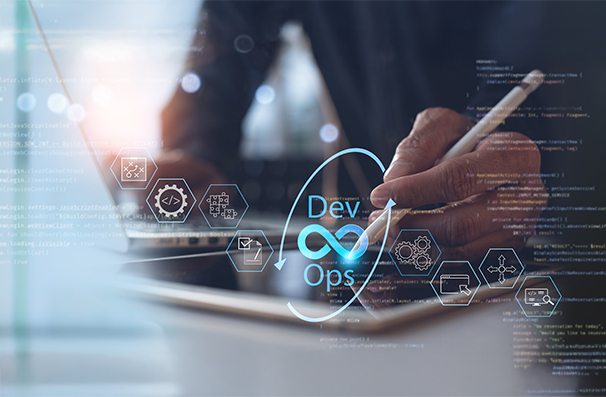
Yntraa DevOps-as-a-Service (DaaS) brings automation, velocity, and reliability to your software delivery lifecycle.
It unifies development and operations under one managed platform, enabling continuous integration, continuous delivery, and infrastructure automation—without the overhead of tool management or complex pipelines.
From source to deployment, Yntraa DevOps empowers teams to build, test, deploy, and scale applications faster and more securely across cloud, hybrid, or on-premise environments
Pre-built and customizable pipelines powered by Jenkins, GitLab.
Native support for Terraform and Ansible for consistent, repeatable environments.
Full integration with Docker, Kubernetes, and Helm for modern microservices delivery.
Continuous testing, code coverage, and vulnerability scanning built into every release cycle.
Integrated with Prometheus, Grafana, and ELK Stack for real-time metrics, logging, and alerting.
CI/CD security scans, secrets management, and policy-as-code to maintain compliance at every stage.
Integrations with GitHub, Bitbucket, Jira, and Slack for seamless communication and agile tracking.
Move from manual deployments to automated, repeatable releases in minutes.
Eliminate the need to manage multiple tools or DevOps expertise in-house.
IaC ensures your dev, test, and production environments behave identically.
Encryption, IAM integration, and audit trails baked into every workflow.
Scale DevOps infrastructure as your projects and teams grow.
Backed by Yntraa Cloud’s DevOps engineers for architecture design, onboarding, and ongoing optimization.
Most teams are onboarded within one to two weeks, depending on integration complexity and toolchain migration needs.
Not necessarily. Yntraa DevOps integrates with popular tools like Jenkins and GitLab. You can continue using your preferred stack.
Each pipeline incorporates static and dynamic code analysis, secrets management, and role-based access control (RBAC). Audit logs are maintained across all stages.
Absolutely. You can create custom scripts, hooks, and integrations using REST APIs or Infrastructure-as-Code modules.