Throughout history, every major technological revolution has been powered by a critical resource. The Industrial Revolution was driven by steam power, the Digital Revolution by semiconductors and computers, and today’s AI revolution by one fundamental capability: compute power.
Over the past four to five decades, advances in computing have transformed the way industries design, manufacture, analyze, and innovate. From enabling complex engineering simulations to powering autonomous systems and generative AI, compute has become the invisible engine behind modern technological progress. As organizations increasingly adopt AI to solve complex business challenges, the availability of scalable, high-performance computing is no longer just an IT requirement, It has become a strategic asset.
The Evolution of Computing
The evolution of computing has fundamentally changed how engineers and scientists solve problems. In the early days of industrial engineering, product development relied heavily on physical experimentation, manual calculations, and repeated prototyping. These methods were time-consuming, expensive, and often limited by the available technology.
The rapid growth in computational capability changed this paradigm. Modern processors, high-performance computing, and cloud infrastructure enable organizations to perform billions of calculations per second. Engineers can now simulate real-world environments, optimize designs, predict failures, and validate concepts digitally before manufacturing begins.
Numerical modeling and simulation have become essential tools across industries, including aerospace, automotive, healthcare, pharmaceuticals, energy, media, and telecommunications. By reducing dependence on physical prototypes, organizations accelerate innovation while significantly lowering costs and risks.
Compute Power Driving Innovation
Scientific discoveries alone rarely create technological revolutions. Innovation often depends on whether sufficient computational resources exist to transform ideas into practical solutions.
One compelling example is the development of dieless drawing an advanced manufacturing process. Although the concept emerged around the same time that the unique properties of Nitinol, a shape-memory alloy, were discovered, the technology could not mature because the computational capabilities required for accurate process control and simulation simply did not exist.
At the time, engineers lacked sophisticated software, digital control systems, and the processing power necessary to model material behavior under varying temperatures and stresses. As computing advanced, manufacturers gained access to precision control systems, numerical simulations, and computer-driven manufacturing technologies that eventually made the process commercially viable.
This example illustrates an important principle: Innovation is not limited by imagination alone—it is often limited by available compute power.
The AI Revolution and the Growing Demand for Compute
Artificial Intelligence has dramatically increased the importance of computational infrastructure. Unlike conventional software, AI systems learn patterns from enormous volumes of data through iterative mathematical optimization. Training modern AI models requires trillions of mathematical operations performed across thousands of processors simultaneously.
As AI models become larger and more sophisticated, computers have emerged as one of the most valuable resources in technology.
Organizations today compete not only on the quality of their data or algorithms but also on their ability to access scalable computing resources that can efficiently train and deploy AI models.
Why Compute Power Matters
1. Accelerating AI Model Training: Training advanced AI models is computationally intensive. Without adequate compute resources, training may require weeks or even months.
Modern GPUs, AI accelerators, and distributed HPC clusters dramatically reduce training time, allowing researchers and enterprises to iterate faster, test more ideas, and bring innovations to market sooner.
2. Processing Massive Datasets: AI systems rely on enormous datasets collected from sensors, enterprise applications, customer interactions, scientific research, and the internet.
High-performance compute enables rapid data ingestion, preprocessing, feature engineering, and model optimization, ensuring that AI systems can learn efficiently from continuously growing datasets.
3. Improving Accuracy and Intelligence: Larger computational capacity allows organizations to build deeper neural networks and larger foundation models capable of understanding increasingly complex relationships.
4. Enabling Real-Time Decision Making: Many AI applications require decisions within milliseconds. Examples include autonomous vehicles, intelligent traffic systems, financial fraud detection, iIndustrial automation, smart manufacturing, healthcare diagnostics, cybersecurity threat detection and conversational AI assistants.
These applications depend on low-latency compute infrastructure capable of delivering instant inference without compromising accuracy.
5. Powering Digital Twins and Simulations: One of the most transformative applications of compute is the creation of digital twins—virtual representations of physical assets, factories, cities, or even entire supply chains.
By combining AI with high-performance computing, organizations can simulate real-world scenarios, predict equipment failures, optimize operations, and improve business resilience before changes are implemented physically.
Cloud Computing: Democratizing Compute
Historically, access to supercomputers was limited to governments and large research institutions. Cloud computing has fundamentally changed this landscape by making virtually unlimited compute resources available on demand. Today, organizations can provide: High-performance CPUs, GPU clusters, AI accelerators, High-speed storage, Large-memory instances, Kubernetes platforms and Distributed AI environments within minutes, paying only for what they use. This democratization has enabled startups, universities, enterprises, and researchers to innovate without investing millions in physical infrastructure.
Compute as the Fourth Pillar of AI. AI success has traditionally been associated with three core elements: Data, Algorithms and Human expertise. Today, there is growing recognition of a fourth pillar: “compute infrastructure”. Computers have evolved from being a supporting resource to becoming a strategic competitive advantage.
The Future of Compute
The demand for computational power will continue to grow as emerging technologies become mainstream. Future innovations such as autonomous robotics, multimodal AI, quantum-inspired computing, climate modeling, drug discovery, precision medicine, and large-scale digital twins will require computing capabilities far beyond today’s standards.
To meet this demand, organizations are investing in:
- Cloud IaaS
- AI-native cloud infrastructure
- GPU superclusters
- Specialized AI chips
- Edge computing
- High-speed networking
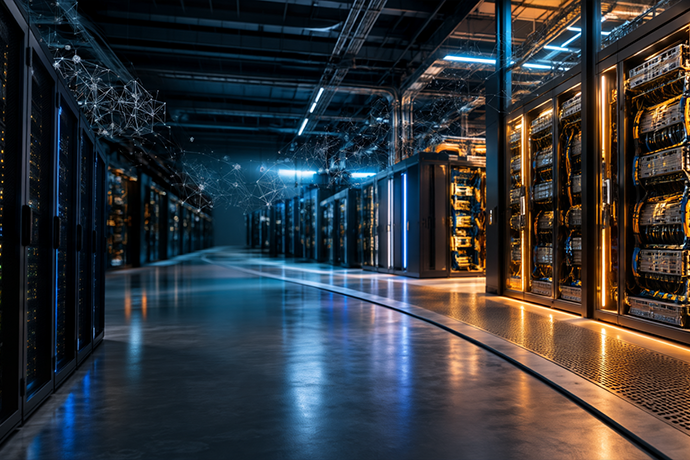
- Sustainable and energy-efficient data centers
These investments will define the next generation of digital transformation.
Conclusion
The story of technological progress is, in many ways, the story of increasing computational capability. From advanced manufacturing and engineering simulations to generative AI and autonomous systems, compute power has become the foundation upon which modern innovation is built.
As the AI era accelerates, compute is no longer merely operational resource, it is a strategic enabler that determines how quickly organizations can innovate, how accurately AI systems perform, and how effectively businesses compete in a digital economy.
The organizations that invest in scalable, high-performance computing today will be the ones leading tomorrow’s breakthroughs. In the age of Artificial Intelligence, compute is not simply powering machines, It is powering the future of human innovation.